A home-loss dream is not a forecast
Dreaming about losing your home can feel more like an event than a metaphor. You may wake with the sensation of having nowhere to go, a list of belongings still inside or a door that will not open. Because housing is tied to safety, privacy and everyday routine, the dream can stay with you long after other dreams have faded.
The first grounded point is simple: the dream is not evidence that you will be evicted, lose your house or become homeless. Dreams do not provide a dependable forecast of future housing events. They can, however, gather feelings that are already present: financial strain, uncertainty about a move, conflict at home, a changing relationship with a place or fear of losing control.
Start with the emotional fact rather than the image. Were you panicked, ashamed, relieved, angry, lonely or strangely calm? The same empty room can feel like abandonment in one dream and freedom in another. Research on dreaming describes both continuity with waking concerns and the unusual recombination that sleep brings, so the dream can be connected to your life without having one fixed code 3.
Why home becomes dream material
Home is more than a building. It can hold routines, family history, private identity, financial security, neighbourhood ties and the feeling that you know what happens next. When one of those foundations feels uncertain, the dreaming mind may use the clearest image it has: a house, flat, bedroom, key or doorway.
Housing concerns also have a direct relationship with sleep. A US public-health study found that people reporting housing insecurity were more likely to report insufficient sleep and frequent mental distress than people without that insecurity 2. The study does not explain the meaning of individual dreams, and its results cannot be applied mechanically to everyone. It does show that worries about rent, mortgages, overcrowding, safety or a possible move can affect the conditions in which sleep happens.
Even when your housing is stable, the dream may use home to represent another kind of security. A new job, a relationship change, a family disagreement or a decision about where to live can make familiar routines feel less certain. Losing the home in the dream may be a way of expressing ‘I do not know where I stand’ rather than a literal wish or warning.
Common versions of the dream
Being evicted can bring the fear of rejection or not being allowed to remain. You might ask whether you have recently felt judged, excluded or as if you have to justify your place. It may also reflect a real conversation about bills or tenancy, in which case the practical concern is already enough explanation.
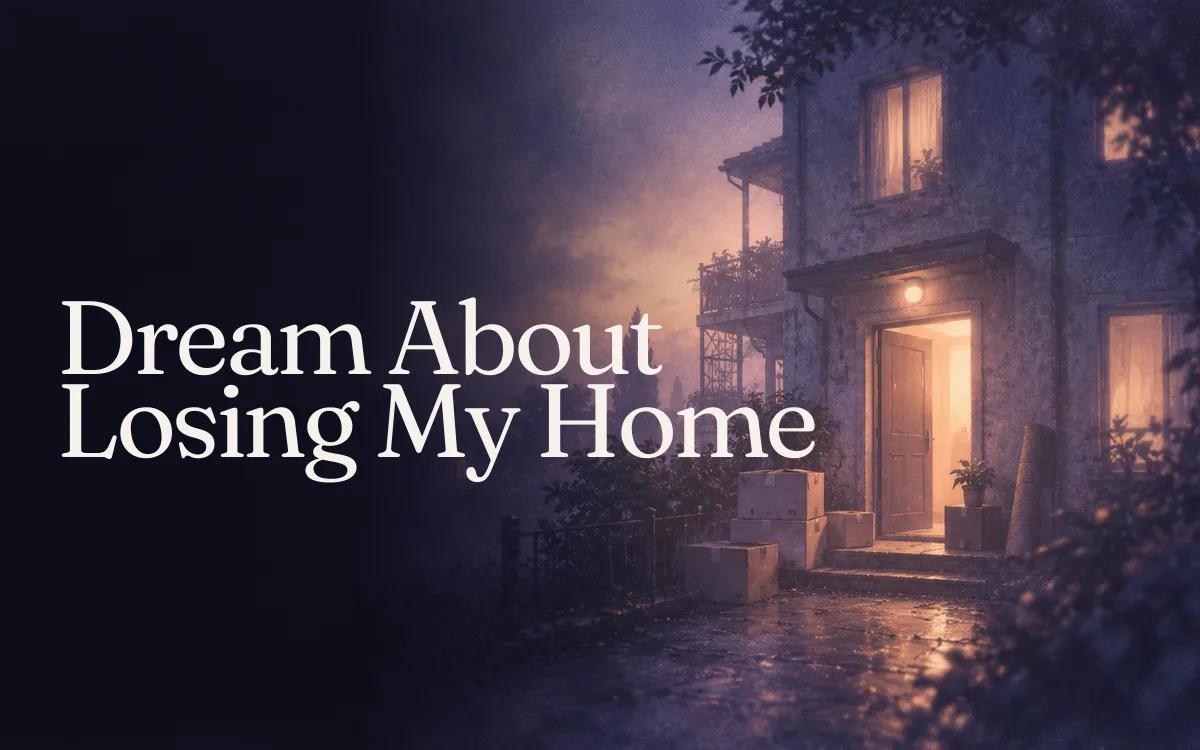
Packing boxes often places change and choice at the centre. What did you pack first? Were you trying to save photographs, documents, clothes, food or something that only has sentimental value? The answer can show what the dream treated as essential. If you could not pack anything, the strongest feeling may have been helplessness rather than attachment.
Being locked out can feel like a loss of access to comfort, privacy or a part of yourself. Searching for a key may echo a waking problem for which you cannot yet see the right next step. Watching a house collapse or disappear can intensify grief, but it may also represent the end of a phase that has already changed in ordinary life.
Finding a new place, sleeping somewhere temporary or sharing a room shifts the dream towards adaptation. You may still feel unsettled, but notice whether the new space offered warmth, company or possibility. A dream does not have to end happily to reveal that some part of you is looking for a workable future.
When the dream reflects real housing insecurity
If you are worried about paying rent, facing eviction, living in temporary accommodation or staying somewhere that does not feel safe, the dream may be a direct continuation of waking stress. It does not need symbolic interpretation. Your mind is responding to a serious situation, and practical help is more important than decoding the house.
Make the waking problem as specific as possible. Is the immediate concern a payment date, a landlord conversation, overcrowding, a move, repairs, safety or not knowing where you will be next month? Writing down one concrete question can make it easier to find the right local service, housing adviser, legal clinic, community organisation or trusted person. Use current local guidance for decisions about housing and emergency safety.
Ongoing insecurity can also make sleep shorter or more interrupted. That matters in its own right. If you are exhausted, frightened or unable to settle because of your living situation, seek support where you can. Dreamia can offer reflection, but it cannot provide housing, legal, medical or emergency assistance.
Home, memory and emotional processing
Old homes often appear because they hold dense emotional memories. A childhood bedroom, former flat or grandparent’s house may contain several periods of your life at once. The dream may borrow the place to explore who you were, what changed or what still feels unfinished. Notice which version of the home appeared and whether it looked as you remember it.
Sleep research has described an intimate relationship between sleep, emotional brain function and the processing of emotionally important memories 1. This does not mean every dream is a neat overnight therapy session, or that a dream proves a particular memory has been processed. It means emotional salience is a reasonable context for understanding why a place can return with unusual force.
The dream may also change the house. Extra rooms, missing walls, unfamiliar neighbours or impossible corridors are normal dream inventions. Rather than asking what each room universally means, ask what it allowed you to feel or avoid. A locked room may be private, frightening or simply unexplored depending on the whole scene.
A gentle way to reflect
Write the dream in a few plain sentences, then answer five questions: What did I fear losing? What did home give me in the dream? Who was allowed in or kept out? What was changing in waking life? What would help me feel a little more secure today? These prompts keep the reflection close to your experience rather than forcing a symbolic answer.
Separate the emotional question from the practical question. If the dream brings up a real housing concern, make a practical plan or contact support. If your housing is secure but the dream echoes a relationship, identity or life transition, choose a small action that restores routine: tidy one corner, call someone, write down a decision or make your bedtime feel more settled.
You can also revisit the ending while awake. Imagine the door opening, a friend answering, a safe place being found or your belongings being carried somewhere that feels like yours. This is not a magical rewrite or a promise that the problem is solved; it is a way of giving the nervous system an alternative image when the nightmare repeats.
When to seek support
An occasional dream about losing your home can follow a stressful day, a move, a difficult conversation or a story you have seen. It becomes more important to seek support when dreams recur, make you afraid to sleep, cause repeated awakenings or intensify daytime anxiety. If you have lived through displacement or another frightening event, recurring dreams can be part of a broader stress response.
A qualified health, mental-health or sleep professional can help you look at sleep disruption in context. You do not need to decide whether the dream is ‘serious enough’ before asking for care. Keep a brief record of frequency, sleep impact, recent stress and anything that helps, and bring it to the appointment if useful.
The most helpful interpretation may be less dramatic than the dream itself: something about security, belonging, change or control has become emotionally active. From there, you can choose the response that fits—practical housing support, a conversation, a boundary, a calmer routine or professional care.
Research on dream content also describes both continuity and non-continuity between waking concerns and dream scenes 3.
Related reading: housing stress and dreams, dreams that feel real, and why do we dream.
Frequently asked questions
Does dreaming about losing my home mean it will happen?
No. Dreams are not reliable predictions of eviction, homelessness or other future events. The dream may be reflecting current stress, uncertainty, change or the emotional importance of feeling secure.
Why do I dream about being evicted?
Eviction imagery can express fear of losing stability, status, privacy or belonging. It can also follow real financial pressure or housing uncertainty. Look at the feeling in the dream rather than assuming one universal meaning.
What does packing boxes mean in a home-loss dream?
Packing may bring up transition, readiness, grief or the question of what you would keep if circumstances changed. It can also simply reflect a recent move, decluttering project or conversation about home.
Why do I dream about returning to an old home?
An old home can connect with memory, family, identity or a period of life that still feels emotionally active. The dream is not necessarily asking you to return; notice what the place represents and how you felt there.
Can housing stress affect dreams and sleep?
Yes. Research connects housing insecurity with insufficient sleep and mental distress. That does not determine the meaning of one dream, but it shows why concerns about rent, safety or stability can remain active at night.
What should I do after a recurring dream about losing my home?
Write down the dream, identify the waking concern it may be echoing and choose one practical step or source of support. If it repeatedly disrupts sleep or causes intense distress, speak with a qualified professional.