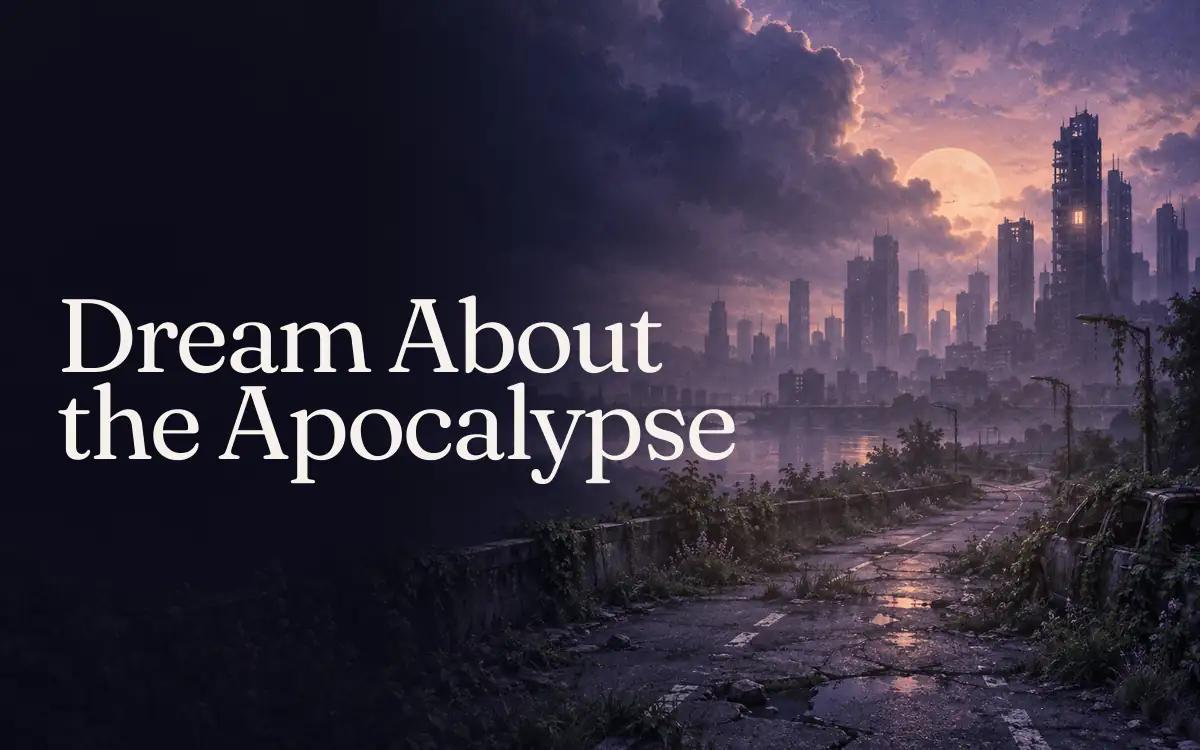
What Does It Mean to Dream About the Apocalypse?
Dreaming about the apocalypse—or the end of the world—usually reflects threat simulation and news or media residue, not a prophecy. The sleeping brain rehearses large-scale danger while day residue from headlines and disaster stories supplies the scenery.
You may see cities emptying, strange skies, sirens, floods, or a quiet sense that everything familiar is over. The dread can outlast the images. Scale often stands in for something closer: foundations that feel unstable, or change too big to hold alone.
At Dreamia, we read these nights as emotional weather—warmly, clearly, and without omen language. This guide is reflective and educational, not a diagnosis.
Why Do I Keep Dreaming the World Is Ending?
Threat-simulation research proposes that dreaming can rehearse responses to danger in a safe setting. Catastrophe scenes may be one dramatic form of that rehearsal when waking life carries diffuse threat. 1
Continuity research finds waking concerns and moods often colour dream content without one-to-one predictions. 2 Hours of crisis headlines, disaster fiction, or scrolling before bed can seed scenery even after an ordinary day.
Recurrence often tracks ongoing stress, heavy media intake, or unresolved fear of loss—collective dread braided with personal foundations.
What Feelings Usually Show Up in Apocalypse Dreams?
- Helplessness: events too large to influence.
- Grief: mourning a way of life, place, or future.
- Urgency: packing, fleeing, finding loved ones.
- Strange calm: release or numbness when the end arrives without panic.
- Protectiveness: keeping others safe while systems unravel.
Is an Apocalypse Dream the Same as a World War 3 Dream?
They overlap. World War 3 dreams zoom on war; apocalypse dreams are a broader “everything ends” umbrella. Both can share threat rehearsal and news echo—link themes without forcing one fixed meaning.
How Can I Work With an End-of-the-World Dream?
- Name it as threat simulation plus possible news residue—not prophecy.
- Limit crisis media in the hour before bed when dreams are raw.
- Journal the feeling and one waking parallel in a single sentence.
- If nightmares recur with daytime impairment, consider clinical support.
- Related: Why Do I Have Nightmares?, Dreaming About World War 3, Tsunami dream meaning.
What Does Research Suggest About These Dreams?
Reviews of dreaming and emotion note REM vividness and emotional load—useful when apocalypse dreams feel overwhelming. 3
Typical-dream surveys show chase, falling, and paralysis as common themes; catastrophe dreams sit in a related family of threat imagery. 4
Research supports reflection on stress, media diet, and emotion—not fatalism.
A Gentle Way to Read the Dream
An apocalypse dream often asks where life feels too big, too fragile, or too loud. Meet it with curiosity: what needs steadiness, what needs a boundary with the news, and what can stay in the night without becoming a daytime verdict?
Why this image may be appearing now
A dream about the Apocalypse may be connected to something recent: a conversation, headline, video, worry, decision or memory. Dreaming minds often use material that is emotionally available rather than selecting symbols from a fixed universal dictionary. Think about what you encountered in the day or two before the dream, but also ask what feeling that material activated. Recent exposure explains the image; your personal response helps explain why it stayed.
The feeling changes the emphasis
The same the Apocalypse can feel comforting, exciting, embarrassing, threatening or absurd. Those emotional differences matter. Fear may point toward uncertainty or loss of control; curiosity may point toward change; excitement may point toward desire or possibility; relief may show that the dream allowed pressure to discharge. Start with the feeling you carried into waking rather than assuming the subject has one meaning for everyone.
If the dream repeats
Repeated dreams about the Apocalypse do not automatically mean that an event is going to happen. Repetition can reflect an unresolved concern, a recurring situation, or repeated exposure to the same image. Record what changes each time: the setting, your role, who else is present and how the dream ends. Small changes can show whether you are becoming more able to act, communicate, leave or ask for help.
If other people were involved
People in the dream may represent actual relationships, imagined audiences or qualities you associate with them. Ask what the person was doing and how you felt around them. A stranger can carry social uncertainty; a family member can activate an old role; a celebrity or fictional character can make a public quality vivid. The dream is not proof of another person’s intentions.
What the dream is not saying
Dreams are not reliable forecasts, diagnoses or instructions. A vivid image of the Apocalypse does not prove that you secretly want it, that it will happen, or that another person is sending you a message. Treat the dream as reflective material. If it connects with a real safety concern, check the facts in waking life and use practical support rather than relying on symbolism.
A grounded way to reflect
Write the dream in a few lines, then answer four questions: What was the strongest feeling? What did I want to happen? What was I trying to avoid? Where does a similar feeling appear in waking life? This keeps the interpretation close to your experience. You can also note what media or conversations preceded sleep, especially if the Apocalypse came from a show, game, news story or social feed.
When the dream feels unusually intense
Strong dreams can be amplified by stress, poor sleep, illness, medication changes, alcohol, grief or an irregular schedule. That does not make them meaningless, but it does mean the body and sleep context deserve attention. If nightmares are frequent, disrupt rest or make you afraid to sleep, consider speaking with a qualified clinician. Dream interpretation should support wellbeing, not replace care.
A useful question to carry forward
Instead of asking only “What does the Apocalypse symbolise?”, ask “What is this dream helping me notice?” The answer may be a boundary, a wish, a pressure, a memory or a need for reassurance. One small waking action—writing something down, checking a fact, having a conversation, resting or changing your media routine—can be more useful than searching for a definitive symbolic answer.
The Bottom Line
Dreaming about the Apocalypse is best understood through the combination of the image, the emotional tone and what is happening in your life now. The subject may provide the vocabulary, but your associations provide the meaning. Keep the interpretation curious, specific and non-diagnostic.
Frequently asked questions
What does it mean to dream about the apocalypse?
It usually reflects threat simulation and media or stress residue—not a prediction that the world will end. The large scale often dramatises shaky foundations, overwhelm, or unfinished fear from waking life.
Why do I keep dreaming the world is ending?
Recurrence often tracks ongoing stress, heavy news exposure, or unresolved fear of loss. Patterns that disrupt sleep or daytime life deserve extra care and, when needed, clinical support.
Are apocalypse dreams the same as WW3 dreams?
They overlap but are not identical. WW3 dreams zoom on war; apocalypse dreams are a broader end-of-everything umbrella. Both can share threat rehearsal and news echo without forcing one meaning.
Can the news cause end-of-the-world dreams?
Yes. Waking threat content from news and disaster media commonly seeds dream scenery through day residue. A gentler wind-down and less graphic evening coverage help many people reduce end-of-world nightmares.
When should I seek help for apocalypse nightmares?
If dreams bring persistent panic, avoidance of sleep, or daytime impairment, talk with a clinician who understands trauma and sleep. This guide is reflective education, not medical care or crisis support.